Category: Policy Papers
-
Knowledge is Power? Technology and Innovation in the Indo-Pacific
Abstract Ever since the 1970s, the Indo-Pacific region has steadily become home to increasing levels of technological output, innovation, and people. During this period China’s economic opening, the United States’ technological dominance, and the broader processes of generalised economic globalisation have contributed to the formation of high-tech global value chains.…
-

European Defence and the Demands of Strategic Autonomy
Fundamental changes in the international system are calling into question the EU’s understanding of itself as a security and defence actor. Challenges such as the rise of China, Russia’s hybrid tactics, questions about the long-term durability of the transatlantic relationship, the risk that terrorist groups may seek to fill strategic…
-
The EU’s Presence and Strategy in the Indo-Pacific
Throughout 2021, it was clear to all external actors that the EU was set to produce a strategy for cooperation in the Indo-Pacific. After initial Council of the EU Conclusions on 19 April 2021 that set out the main parameters for EU engagement, the European Commission and High Representative set about refining…
-

Naval Gazing: The Strategic Compass and the EU’s Maritime Presence
Abstract The EU and its member states will find it increasingly difficult to sustain the rules-based order and the Union’s own economic prosperity without a sizeable and consist- ent investment in maritime power. The politics of the EU’s approach to maritime security is conditioned by questions of geographical priorities and…
-

Securing the Heavens: How can Space Support the EU’s Strategic Compass?
Abstract Despite political and industrial divergences between EU member states, space will play an indispensable role in the Strategic Compass. Space is a strategic enabler that can enrich the EU’s approach to crisis management, resilience, capabilities and partnerships, and the Compass is an opportunity to upgrade the status of space…
-

The EU’s Strategic Compass for Security and Defence: What Type of Ambition is the Needle Pointing to?
Abstract For the past twenty years, the EU has deployed numerous missions and operations to different parts of the world and it has agreed on a suite of new initiatives to boost capability development, synchronise defence investment plans and enhance operational capacity. However, there is still a fundamental question facing…
-

Going viral? EU defence and the response to COVID-19
By now, we are familiar with the serious risks posed by the COVID-19 pandemic. Militaries across Europe have been praised for their role in delivering medical supplies, transporting patients, testing citizens and building makeshift hospitals. Notwithstanding the current second and possible future waves of the virus, however, attention is turning…
-

Sovereignty over Supply? The EU’s Ability to Manage Critical Dependences while Engaging with the World
Abstract Fears about the EU’s trade, resource and technology dependences have only grown since the outbreak of the pandemic, even though US-China trade disputes and the rolling out of 5G have played a significant role, too. Some analysts have pointed to the beginning of a ‘decoupling’ of certain supply chains…
-
The EU’s Strategic Compass and Its Four Baskets: Capability Development
The Strategic Compass promises to give the EU greater clarity over the strategic direction of CSDP and, potentially, EU security and defense more broadly. Which direction is the EU headed? What do North, South, East, and West mean in the context of CSDP? Who is carrying the Compass, and who…
-

Uncharted Territory? Towards a Common Threat Analysis and a Strategic Compass for EU security and defence
Words have meaning. European Commission President Ursula von der Leyen took up her mandate calling for a ‘geopolitical Commission’ and Josep Borrell, the High Representative of the Union for Foreign Affairs and Security Policy/Vice-President of the European Commission (HR/VP), echoed this by stating that the EU needs to ‘learn the…
-

EU-Japan Cooperation on Defence Capabilities: Possibilities?
European countries and Japan both possess advanced defence technologies and they can bring to bear a range of civilian or dual-use technologies for defence procurement and defence research. At the same time, both players recognise that it is increasingly difficult for individual countries to manage defence equipment projects without cooperation.…
-

Digitalising Defence: Protecting Europe in the Age of Quantum Computing and the Cloud
Abstract Digital technologies can vastly improve the operational readiness, effectiveness and technological sovereignty of Europe’s armed forces. For defence to benefit from digitalisation, both the greater interoperability of digital technologies and financial investment is required. The Multi-annual Financial Framework is a test for how serious EU member states are about the digital agenda but low…
-
What Does It Mean to Be a European Defense Company Today?
Après deux décennies marquées par de faibles investissements, la remontée des budgets de défense en Europe et le lancement de nouvelles initiatives (Coopération structurée permanente et Fonds européen de défense en particulier) laissent penser que le tabou sur l’utilisation de fonds européens dans le domaine de la défense est tombé,…
-
Stress Tests: An Insight into Crisis Scenarios, Simulations and Exercises
Abstract Crisis simulations and exercises are an effective way of broadening the minds of decision-makers, forecasting the future, identifying capability gaps, pin-pointing the weaknesses and strengths in the crisis response architecture and developing crisis response networks. The EU increasingly makes use of crisis scenarios. However, simulations and exercises can only add…
-

The Poison Pill: EU Defence on US Terms?
It took two letters. One, sent to Brussels on 1 May 2019 by two US undersecretaries, accused the EU of damaging transatlantic cooperation and hindering US access to Europe’s defence market through the rules it plans to set for the participation of third states in the European Defence Fund (EDF)…
-
Strategic Autonomy: Towards ‘European Sovereignty’ in Defence?
Strategic autonomy. Two familiar words that are yet again in vogue in Europe but which cause confusion and, in some quarters, even alarm. The last time strategic autonomy stirred controversy was in 2003 during the run-up to the Iraq War, but perhaps the most well-known instance followed the Balkan crisis…
-
Artificial Intelligence: What Implications for EU Security and Defence?
Consider a world where human decision-making and thought processes play less of a role in the day-to-day functioning of society. Think now of the implications this would have for the security and defence sector. Over the next few decades, it is likely that Artificial Intelligence (AI) will not only have…
-
European Defence Markets and Industries: New Initiatives, New Challenges
The author discusses how the excessive focus of European countries on national priorities have been leading to a number of structural problems, in the European defence market, related to international competition, military redundancies and unnecessary costs. The article reflects on the recent efforts by the EU to support the European…
-
EU Defence Capability Development: Plans, Priorities, Projects
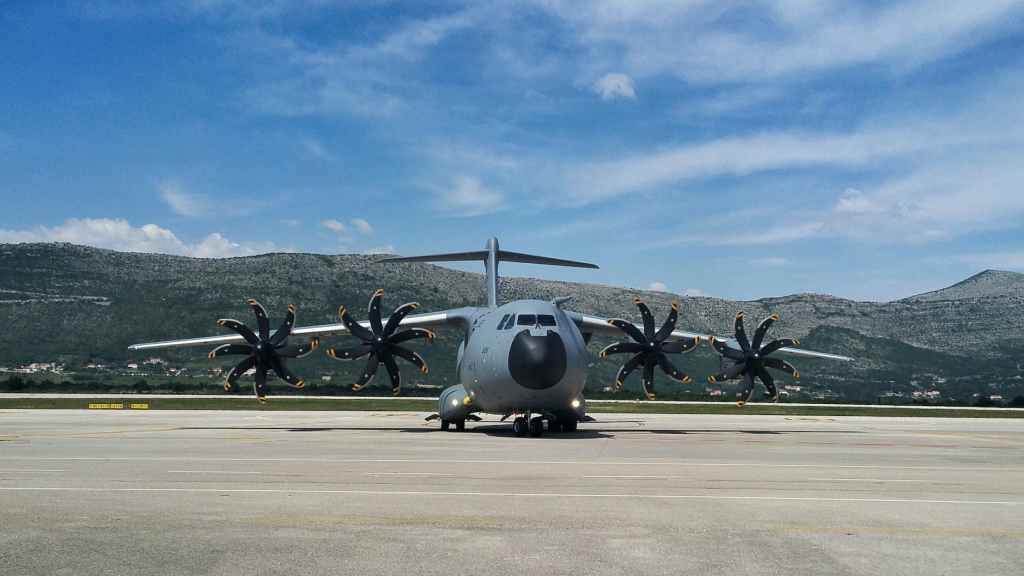
Enthusiasts of strategic studies will be familiar with the tripartite, quasi-mathematical equation of ends, ways and means. Over a period of 18 months or so – beginning in June 2016 with the publication of the EU Global Strategy (EUGS) and culminating with Permanent Structured Cooperation (PESCO) in December 2017 –…
-

Towards Military Mobility?
The idea that the transportation of military personnel and equipment within Europe is still subject to physical, legal and regulatory barriers may seem odd, especially given the freedom of movement experienced under the Schengen Agreement and the nature of collective deterrence as defined by NATO’s founding Washington Treaty. NATO has…
-

The Cybridisation of EU Defence
While the issue of cyber security is pervasive, cyberdefence is not. Not only are documents such as the EU Global Strategy replete with references to the challenges emanating from cyber, but EU member states and institutions are taking important steps (such as greater investment in cyber capabilities and the establishment of dedicated national…
-

Funding EU Defence Cooperation
European Union member states have spent decades working to identify and fill military capability gaps through initiatives such as the Headline Goals and the Capability Development Plan (CDP). In the European Defence Agency (EDA), participating member states are accustomed to operating on a strictly intergovernmental and largely voluntary basis when…
-
European defence, 60 years after the Treaty of Rome
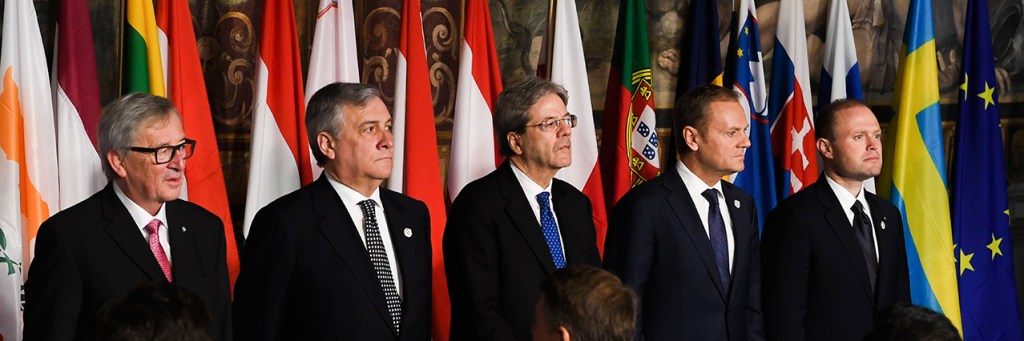
The symbolism of the Capitoline Hill, where the Treaty of Rome was signed over sixty years ago, cannot have been lost on the original signatories of the treaty. As the former location of temples to the gods Saturn and his son Jupiter, the Capitoline Hill embodied wealth, renewal and liberation.…
-

Promoting European Defence Cooperation and the Promise of Financial Incentives
The European Union (EU) has never directly funded defence research or military capability development before; so the fact that EU financial support for both defence research and joint capability development is now possible following the release of the European Defence Action Plan (EDAP) is curious and interesting. The fact that…
-

The CARD on the EU Defence Table
In the 14 November 2016 Council conclusions, member states recognised that there was a need to ‘deepen defence cooperation and ensure more optimal use, including coherence, of defence spending plans’. Although the European Defence Agency (EDA) has been working towards these objectives since 2004, a more ‘structured way to deliver…
-

European Defence: The Year Ahead
After several months of intense work, the European Union ended 2016 having agreed to a number of fresh initiatives designed to articulate (and act on) a new level of ambition for security and defence. Under the overall direction laid down by the EU Global Strategy (EUGS), a specific plan on…
-

EU Defence Research in Development
On the 14 November 2016 EU member states welcomed the presentation of the Implementation Plan on Security and Defence (SDIP) by the High Representative/Vice-President. The plan serves as a follow-up to the EU Global Strategy (EUGS) with a specific focus on security and defence, but, more than this, the SDIP…
-

Making Europe and Europeans Safer
One of the criticisms associated with plans for closer European defence cooperation is that there are no new ideas around. The ‘EU Battlegroups’, ‘Permanent Structured Cooperation’, even the idea for an ‘EU Operational Headquarters’ or a ‘Defence Semester’ are seen as old and sometimes unwieldly initiatives, reminiscent of debates that…
-
After the EU Global Strategy: Connecting the Dots
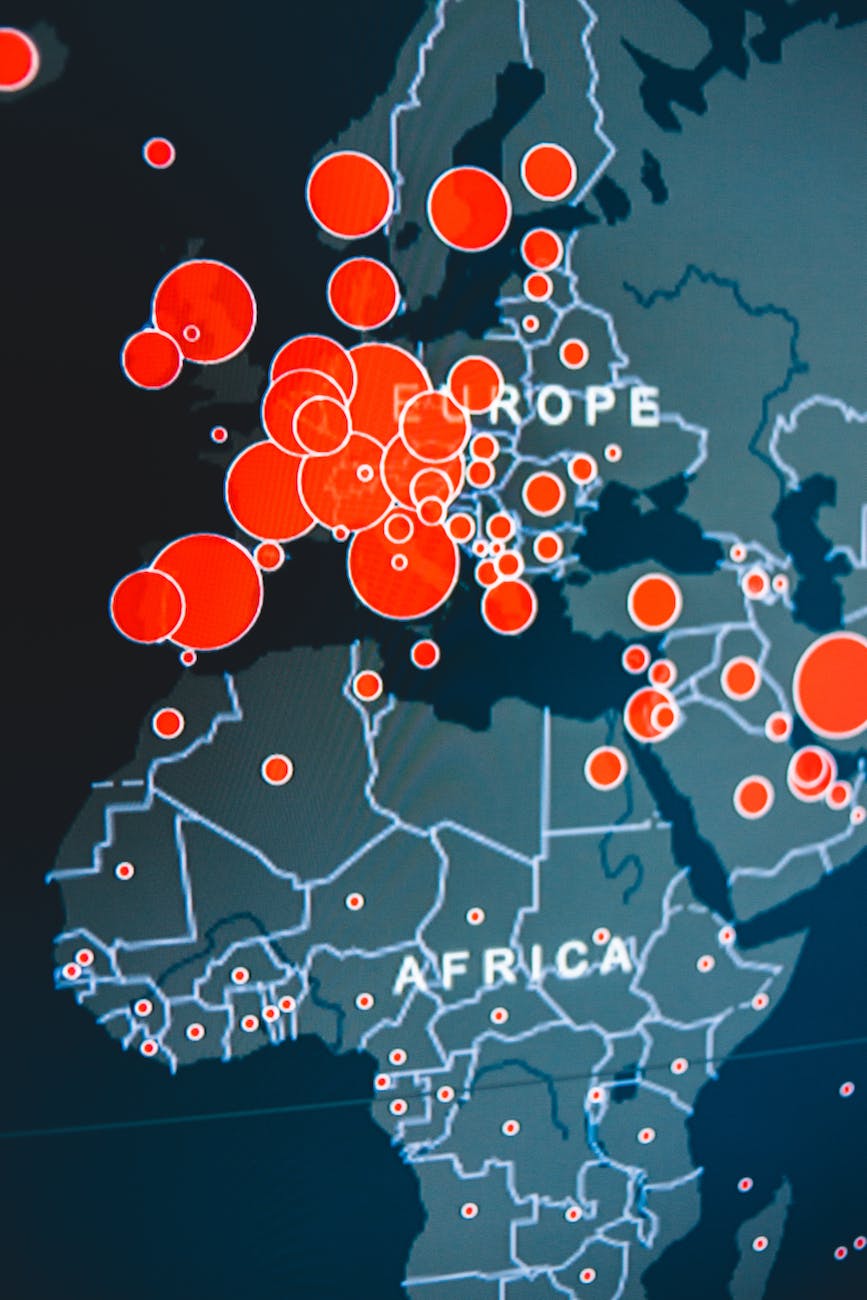
The EU Global Strategy on Foreign and Security Policy (EUGS) is quite candid about the challenges facing European defence and it understandably calls for defence cooperation to become the norm rather than the exception. The new strategy provides Europe with a realistic analysis of the present challenges and it lays…
-

A ‘Game Changer’? The Preparatory Action on Defence Research
The Preparatory Action for Common Security and Defence Policy‐related research is currently under preparation, and it will serve as a test‐bed to prove the relevance of defence‐related research at the European Union‐level. The Preparatory Action could potentially see between €75 ‐ €100 million invested in defence‐specific research over a three‐year…
 Daniel Fiott