-

Military CSDP operations: strategy, financing, effectiveness
This chapter looks at the intersection of the legal and operational parameters in which military operations are deployed under the EU’s Common Security and Defence Policy (CSDP). To this end, the chapter focuses on the challenges related to ‘mission creep’ and the flexibility of operational objectives, to the financial and…
-

The Multiannual Financial Framework and European Defence
Thirteen billion euros. This amount of money is perhaps of little significance when taken as a stand-alone item in the next EU Multiannual Financial Framework (MFF). But in light of the fact that the European Commission has requested this amount for defence research and capability development, it becomes much more…
-
Strategic Autonomy: Towards ‘European Sovereignty’ in Defence?
Strategic autonomy. Two familiar words that are yet again in vogue in Europe but which cause confusion and, in some quarters, even alarm. The last time strategic autonomy stirred controversy was in 2003 during the run-up to the Iraq War, but perhaps the most well-known instance followed the Balkan crisis…
-

Artificial Intelligence: What Implications for EU Security and Defence?
Consider a world where human decision-making and thought processes play less of a role in the day-to-day functioning of society. Think now of the implications this would have for the security and defence sector. Over the next few decades, it is likely that Artificial Intelligence (AI) will not only have…
-

European Armaments Standardisation
The standardisation of armaments has been a long-standing focus of EU efforts to enhance the Union’s military effectiveness, to improve capability development and to support the competitiveness of the European defence industry. Armaments standardisation is a process that can lead to cost savings for defence spending by injecting added-value in…
-

America First, Third Offset Second?
In 2014, the US Department of Defense announced that it would embark on a new defence innovation initiative termed the ‘Third Offset Strategy’. This Obama-era strategy was conceived to overcome the perceived military-technological rise of states such as China, Russia, Iran and North Korea. Since the election of President Donald…
-

European Defence Markets and Industries: New Initiatives, New Challenges
The author discusses how the excessive focus of European countries on national priorities have been leading to a number of structural problems, in the European defence market, related to international competition, military redundancies and unnecessary costs. The article reflects on the recent efforts by the EU to support the European…
-

Yearbook of European Security 2018
Abstract The EUISS Yearbook of European Security (YES) 2018 is the Institute’s annual publication compiling key information and data related to the EU’s Common Foreign and Security Policy (CFSP) and Common Security and Defence Policy (CSDP) in 2017. YES 2018 opens with a preface by Federica Mogherini, High Representative for…
-
EU Defence Capability Development: Plans, Priorities, Projects
Enthusiasts of strategic studies will be familiar with the tripartite, quasi-mathematical equation of ends, ways and means. Over a period of 18 months or so – beginning in June 2016 with the publication of the EU Global Strategy (EUGS) and culminating with Permanent Structured Cooperation (PESCO) in December 2017 –…
-

Humanitarian Diplomacy
Humanitarian diplomacy has emerged as a concept to promote and dissuade certain types of humanitarian action. The concept took hold mainly in the post-Second World War era and the advent of global humanitarianism. It is a distinct form of diplomacy. Governments, international organizations, and non-governmental organizations “conduct” humanitarian diplomacy in…
-
Protecting Europe, Permanently? The Future of EU Defence
One of the first initiatives that emerged from the EU Global Strategy was the formation of a single military planning and conduct capability for the strategic command of some of the EU’s military CSDP operations. The logic is that having a single command structure for operations, as opposed to an…
-

Towards Military Mobility?
The idea that the transportation of military personnel and equipment within Europe is still subject to physical, legal and regulatory barriers may seem odd, especially given the freedom of movement experienced under the Schengen Agreement and the nature of collective deterrence as defined by NATO’s founding Washington Treaty. NATO has…
-

EU-NATO Cooperation: The Case of Defense R&D
The aim of this chapter is to analyze how the European Union (EU) and the North Atlantic Treaty Organization (NATO) stimulate defense research and development (R&D) cooperation among their respective members. The chapter also seeks to understand how, if at all, the EU and NATO cooperate with each other as…
-
Permanent Structured Cooperation: What’s in a Name?
Abstract Permanent Structured Cooperation (PeSCo), the so-called ‘sleeping beauty’ of EU defence, is awake. Still barely predictable only a year ago, PeSCo is an ambitious, binding and inclusive legal framework aimed at incentivising defence cooperation among member states. PeSCo is based on binding commitments between member states that could promote…
-

The Cybridisation of EU Defence
While the issue of cyber security is pervasive, cyberdefence is not. Not only are documents such as the EU Global Strategy replete with references to the challenges emanating from cyber, but EU member states and institutions are taking important steps (such as greater investment in cyber capabilities and the establishment of dedicated national…
-

Funding EU Defence Cooperation
European Union member states have spent decades working to identify and fill military capability gaps through initiatives such as the Headline Goals and the Capability Development Plan (CDP). In the European Defence Agency (EDA), participating member states are accustomed to operating on a strictly intergovernmental and largely voluntary basis when…
-
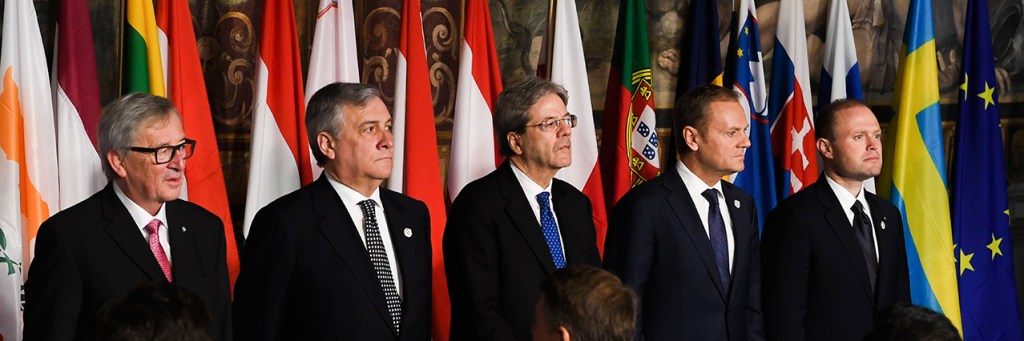
European defence, 60 years after the Treaty of Rome
The symbolism of the Capitoline Hill, where the Treaty of Rome was signed over sixty years ago, cannot have been lost on the original signatories of the treaty. As the former location of temples to the gods Saturn and his son Jupiter, the Capitoline Hill embodied wealth, renewal and liberation.…
-

The European Defense Market: Disruptive Innovation and Market Destabilization
The global defense industry is shifting toward a new paradigm in which an emphasis on technology-driven capability development is being undermined by disruptive innovations emanating from the commercial sector. This evolution is likely to result in important effects on the defense market, lessening barriers to entry and turning upside down…
-

Another Russian invasion of Ukraine? A Scenario
In the summer of 2020, Russian forces entered Dnipropetrovsk International Airport (Ukraine’s fourth largest city), blockaded the M34 motorway that links Dnipropetro- vsk to Kiev and seized railway lines in the region. At the same time, Russia deployed the Admiral Grigorovich, Ladnyy and Smetlivyy frigates and the Azov and Caesar Kunikov landing ships in the Sea of Azov, sent…
-

Promoting European Defence Cooperation and the Promise of Financial Incentives
The European Union (EU) has never directly funded defence research or military capability development before; so the fact that EU financial support for both defence research and joint capability development is now possible following the release of the European Defence Action Plan (EDAP) is curious and interesting. The fact that…
-

Defence in Detail
Abstract The following pages bring together data on defence spending from three different sources: the International Institute for Strategic Studies (IISS), the North Atlantic Treaty Organization (NATO) and the Stockholm International Peace Research Institute (SIPRI). Data for 2016 from the EDA were not available at time of publication. IISS and SIPRI figures dis-…
-

The CARD on the EU Defence Table
In the 14 November 2016 Council conclusions, member states recognised that there was a need to ‘deepen defence cooperation and ensure more optimal use, including coherence, of defence spending plans’. Although the European Defence Agency (EDA) has been working towards these objectives since 2004, a more ‘structured way to deliver…
-
Patriotism, Preferences and Serendipity: Understanding the Adoption of the Defence Transfers Directive
The 2009 adoption of the EU directive on intra-Community transfers of defence equipment (‘ICT directive’) (2009/43/EC) aims to harmonize defence transfer licencing in the EU. The directive is part of a ‘defence package’ – along with a directive on defence procurement (2009/81/EC) – that is geared to liberalizing and regulating…
-

European Defence: The Year Ahead
After several months of intense work, the European Union ended 2016 having agreed to a number of fresh initiatives designed to articulate (and act on) a new level of ambition for security and defence. Under the overall direction laid down by the EU Global Strategy (EUGS), a specific plan on…
-

Understanding EU Foreign Policy: Theory
The institutional context in which the European Union conducts its external action – starting with the Common Foreign and Security Policy (CFSP) and the Common Security and Defence Policy (CSDP) – is complex, sometimes unclear, and highly fragmented. Moreover, the large number of players and formats for shaping, making and…
-

The EU, NATO and the European Defence Market: Do Institutional Responses to Defence Globalisation Matter?
The European Union (EU) and North Atlantic Treaty Organisation (NATO) are both institutions through which European states can engage in European defence–industrial cooperation. Each organisation embodies a unique set of institutional tools through which to manage issues such as the high and rising costs of defence procurement, technological innovation, defence…
-

EU Defence Research in Development
On the 14 November 2016 EU member states welcomed the presentation of the Implementation Plan on Security and Defence (SDIP) by the High Representative/Vice-President. The plan serves as a follow-up to the EU Global Strategy (EUGS) with a specific focus on security and defence, but, more than this, the SDIP…
-

Making Europe and Europeans Safer
One of the criticisms associated with plans for closer European defence cooperation is that there are no new ideas around. The ‘EU Battlegroups’, ‘Permanent Structured Cooperation’, even the idea for an ‘EU Operational Headquarters’ or a ‘Defence Semester’ are seen as old and sometimes unwieldly initiatives, reminiscent of debates that…
-

The Trans-Pacific Partnership: Defence, Industry and Strategy
The Trans-Pacific Partnership, if ratified by all parties, is likely to have ramifications for the global defence market and the US’ economic and political strategy towards the Asia-Pacific region. Although the TPP excludes a number of defence-related issues such as defence procurement, the TPP’s provisions on technology transfers and intellectual…
-

After the EU Global Strategy: Security and Defence – Consulting the Experts
Following the publication of the EU Global Strategy on Foreign and Security Policy (EUGS) in June, attention has now turned to how the strategy can concretely be implemented. A Security and Defence Implementation Plan (SDIP) will focus on the EU’s ability – primarily through the CSDP – to respond to…
-
Subscribe
Subscribed
Already have a WordPress.com account? Log in now.
 Daniel Fiott